.avif)
A pool cover can wear out long before the rest of the pool does. The difficult part is determining whether damaged material can reasonably be repaired, whether the cover fabric should be replaced, or whether the real problem is in the track, drive mechanism, controls, anchors, or another part of the system.
Tate Construction Company provides pool cover replacement in Albuquerque and surrounding communities. Our replacement work starts by documenting the existing cover and system, confirming dimensions and available product information, and defining what can be replaced without assuming that every worn cover requires a complete new system.
Start With the Condition of the Cover Material
A small isolated defect and a cover that is generally deteriorated are two different problems. A limited repair may be worth investigating when damage is isolated and the surrounding material remains flexible, stable, and otherwise serviceable.
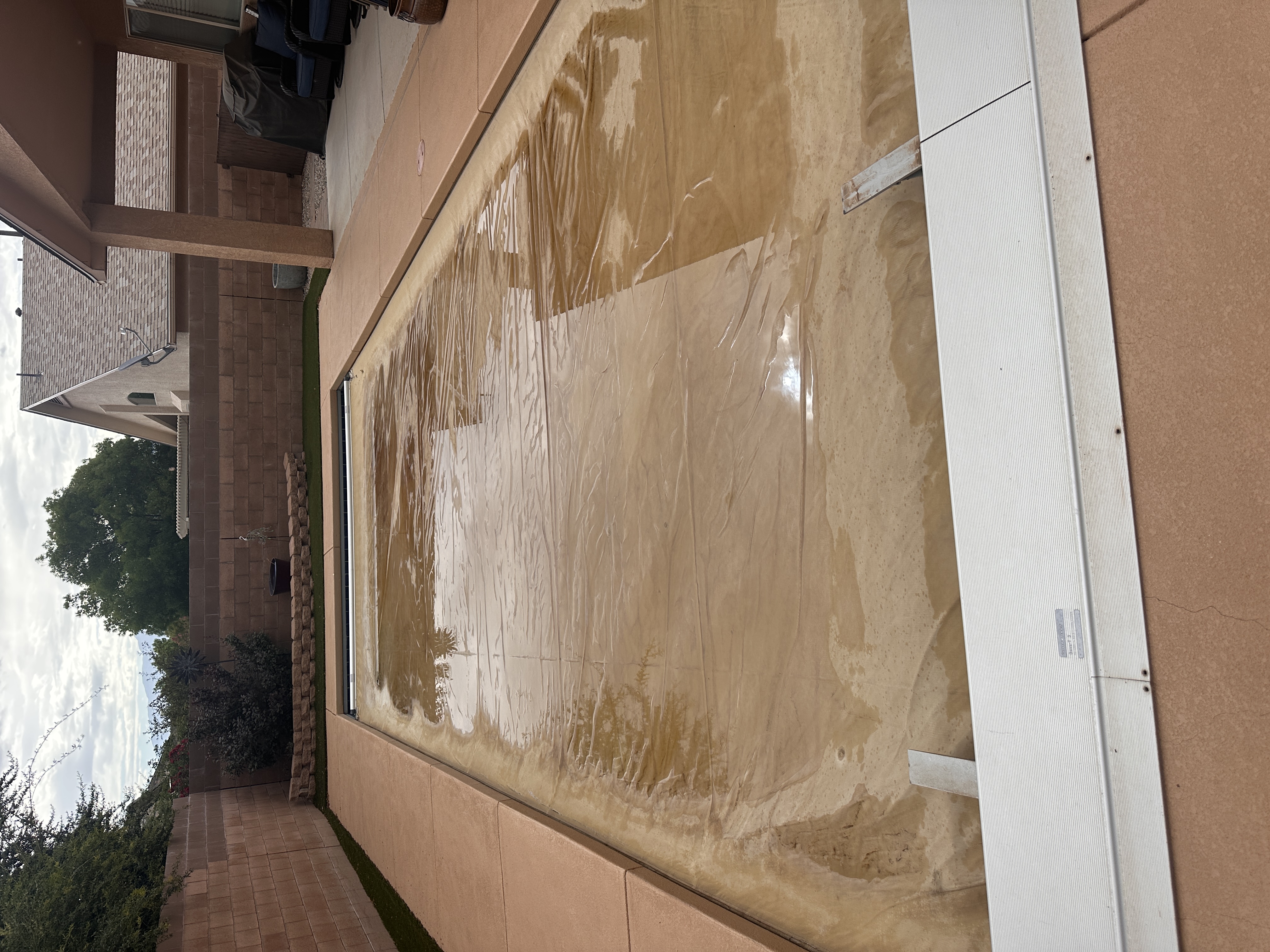
Replacement becomes more reasonable when wear is widespread. Warning signs can include multiple tears or holes, brittle or stiff material, stretched or distorted fabric, deteriorated seams or webbing, repeated patching, or visible deterioration across large portions of the cover.
The decision should be based on the actual condition of the cover rather than age alone. Albuquerque sun, wind, airborne dust, temperature swings, pool chemistry, use, storage, and maintenance can all affect how a cover wears.
When Fabric-Only Replacement May Make Sense
For some existing systems, the cover fabric can be replaced while compatible tracks, drive components, controls, anchors, and other parts remain in place. Whether that is appropriate depends on the specific system, condition of its components, availability of compatible replacement material, and manufacturer requirements.
This can be practical when the fabric is the clearly deteriorated component but the supporting system remains suitable for continued use.
Tate does not assume that fabric replacement automatically solves a mechanical problem. If the cover is binding, operating unevenly, making abnormal noise, failing to open or close correctly, or showing another sign of a drive or track problem, that condition should be identified separately before a replacement cover is ordered.
When a Patch Stops Being a Practical Repair
Patching can be useful for limited damage, but repeated repairs can eventually signal that the surrounding material is nearing the end of its useful service condition. The practical question is not simply whether one spot can be patched. It is whether the rest of the cover remains in good enough condition to justify keeping it.
If several areas are deteriorating, the cover has lost its shape, material around previous repairs is also failing, or new damage continues to appear, replacing the fabric may provide a more predictable result than repairing one location at a time.
Mechanical Problems Are a Separate Decision
Automatic pool covers combine cover material with mechanical and electrical components. A damaged cover does not automatically mean the motor, controls, tracks, ropes, pulleys, or other components need replacement. The reverse is also true: new fabric does not correct a malfunctioning mechanical system.
Tate's pool-cover service is intentionally replacement-focused. During evaluation, we identify visible conditions and define the replacement scope that can be supported. Mechanical repair, controls, electrical work, track repair, rope or pulley replacement, and other system-specific work must be separately diagnosed and scoped when required.
Measure and Identify the Existing System Before Ordering
Replacement covers are not one-size-fits-all. Before a cover is ordered, the existing installation should be documented carefully. Useful information can include pool and cover dimensions, track arrangement, manufacturer or system identification when available, attachment details, cover construction, wear patterns, and any operational problem that could affect replacement.
This is why Tate begins with an on-site evaluation rather than treating a pool cover like an off-the-shelf material purchase.
Albuquerque Weather Makes Condition More Important Than a Calendar
New Mexico's climate exposes exterior materials to intense sun, heat, cold, wind, dust, and large daily temperature changes. Pool covers also operate in a wet, chemically treated environment. Those conditions make visual and functional inspection more useful than relying on a generic replacement interval.
Repair, Fabric Replacement, or System Work?
Consider a limited repair when damage is isolated and the surrounding cover remains in good condition.
Consider fabric or cover replacement when deterioration is widespread but the supporting system appears suitable for continued use and compatible replacement material is available.
Investigate the system separately when the problem involves operation, tracks, controls, drive components, anchors, or other hardware rather than the cover material itself.
Schedule a Pool Cover Replacement Evaluation
If your pool cover is torn, stretched, brittle, deteriorated, poorly fitting, or has been repaired repeatedly, Tate Construction Company can evaluate the existing condition and determine whether a replacement cover or fabric-only replacement may be appropriate.
See our Pool Cover Replacement service page for the current replacement process and scope, or contact Tate Construction Company to schedule an on-site evaluation.