.avif)
Aging-in-Place & Accessible Remodeling
Most homes were not designed around changing mobility, balance, strength, or health needs. Steps at entrances, narrow doorways, high bathtub walls, tight bathrooms, and difficult floor transitions can make everyday activities harder and increase the risk of falls or injury.
Tate Construction Company provides aging-in-place remodeling and residential accessibility modifications throughout Albuquerque, Rio Rancho, and surrounding communities. We help homeowners and families modify existing homes for safer access, greater independence, easier caregiving, injury recovery, and long-term living.
Projects may range from targeted improvements such as grab bars, handrails, doorway widening, and threshold corrections to complete accessible bathroom renovations, wheelchair ramps, kitchen modifications, first-floor living spaces, and whole-home remodeling.
Home Modifications Designed Around the Individual
Accessibility remodeling is not a one-size-fits-all service. The right solution depends on the resident, the home, the mobility challenge, and how the space is used each day.
We begin by evaluating the existing conditions and understanding the problems the resident or caregiver needs to solve. From there, we develop practical construction options that improve safety, access, comfort, and usability.
When a homeowner is working with an occupational therapist, physical therapist, case manager, medical provider, insurance representative, veterans organization, or assistance program, Tate Construction can review the recommendations and translate them into a detailed construction scope.
Our goal is to create spaces that feel like part of the home—not an institution. Accessibility features can often be incorporated using attractive materials, thoughtful layouts, and finishes that complement the property.
Aging-in-Place and Accessible Remodeling Services
Accessible Bathroom Remodeling
Bathrooms are often the first area that needs to be modified when mobility, balance, or transfer ability changes. Accessible bathroom remodeling may include safer layouts, improved clearances, accessible fixtures, reinforced walls, seating, and space for mobility equipment or caregiver assistance.
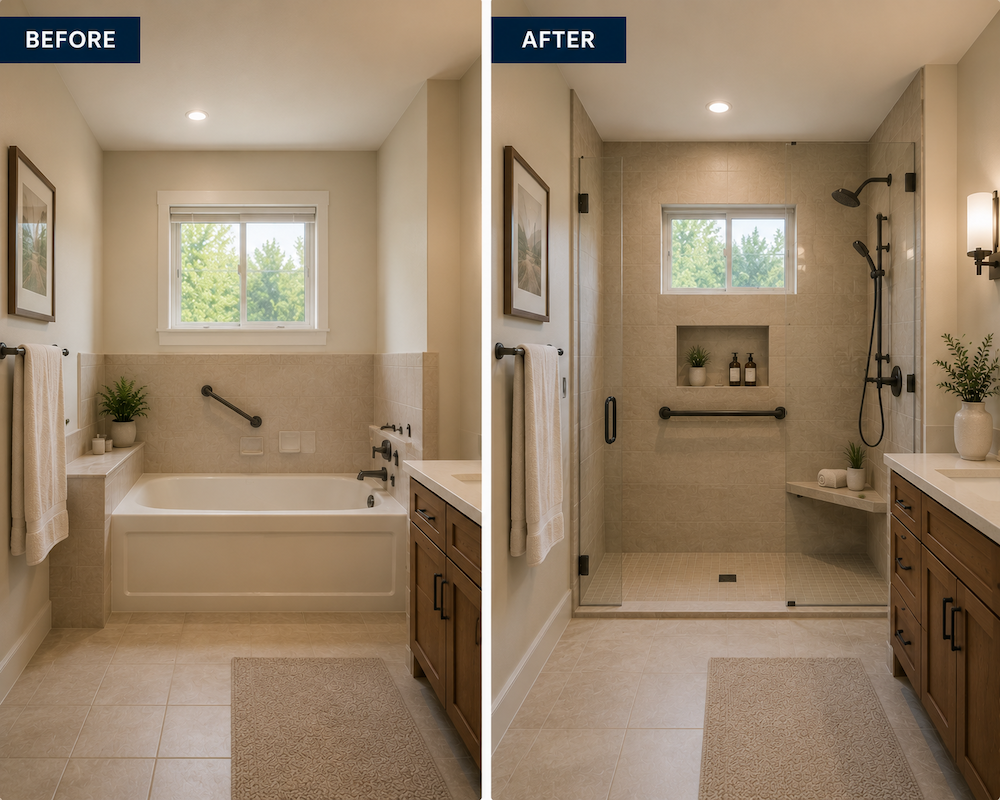
Tub-to-Shower and Low-Threshold Shower Conversions
Replacing a bathtub with a walk-in, low-threshold, or roll-in shower can improve bathing access and reduce the risk associated with stepping over a high tub wall. The right shower configuration depends on the resident’s mobility, transfer needs, and the available space.
Wheelchair Ramps and Accessible Entrances
Steps, uneven walkways, and narrow landings can prevent someone using a wheelchair, walker, or other mobility device from entering a home safely. We construct ramps, landings, handrails, transitions, and related entrance modifications based on the property and applicable requirements.
Door Widening and Interior Accessibility
Narrow doors, raised thresholds, tight hallways, and poorly arranged rooms can restrict movement through a home. Interior accessibility work may include widening openings, modifying walls, replacing doors and hardware, correcting transitions, and improving travel routes between frequently used spaces.
Accessible Kitchen Modifications
Kitchen modifications can improve access to sinks, work surfaces, storage, appliances, and frequently used items. Projects may include adjusted counter heights, accessible sink configurations, pull-out storage, improved clearances, relocated appliances, and complete layout changes.
Grab Bars, Handrails, and Fall-Prevention Improvements
Properly located support features can make bathing, toileting, walking, and changing elevation safer. We can install structural wall blocking, grab bars, handrails, shower seating, improved lighting, mobility-friendly flooring, and other fall-prevention improvements.
Disability and Recovery Home Modifications
Accessibility needs may arise suddenly after an injury, surgery, illness, or hospital stay. Other modifications are intended to support permanent or progressive conditions. We can address the immediate need while considering how the home may need to function in the future.
Universal Design and Long-Term Planning
Universal design improves the usability of a home for people of different ages and abilities. Wider pathways, lever-style hardware, safer bathing areas, improved lighting, step-free access, and flexible layouts can make the home easier to use now while preparing it for changing needs later.
Environmental and Medical-Accessibility Modifications
Some agencies, Medicaid-related programs, disability organizations, case managers, insurers, and funding sources refer to this work as an environmental modification, home modification, or medically necessary accessibility modification.
These projects may require more documentation than an ordinary residential remodel. The requested construction may need to address a specific mobility limitation, safety concern, activity of daily living, caregiver requirement, or recommendation from a qualified professional.
Tate Construction can provide measurements, photographs, construction descriptions, material information, and clearly organized estimates for review by the homeowner and the appropriate therapist, case manager, agency, insurer, or funding representative.
When a project includes both necessary accessibility work and elective finish upgrades, we can separate those portions within the estimate.
Can Insurance or Assistance Programs Help Pay for Home Modifications?
Some homeowners may have access to assistance through Medicaid-related programs, disability services, veterans benefits, workers’ compensation claims, grants, nonprofit organizations, or other public and private resources.
Eligibility, available benefits, required documentation, and authorization procedures vary significantly. Tate Construction does not determine medical necessity, program eligibility, or whether a particular improvement will be covered.
When third-party funding is being pursued, we can prepare contractor estimates and supporting construction information for submission to the appropriate program, case manager, insurer, or agency. Construction should not begin until the homeowner has received any required authorization and understands who is responsible for payment.
A General Contractor for Complete Accessibility Remodeling
Accessibility modifications often involve several construction trades. A bathroom conversion may require demolition, framing, plumbing, electrical work, waterproofing, tile, drywall, flooring, cabinetry, and painting. A ramp or accessible entrance may require grading, concrete, structural framing, landings, railings, drainage, and modifications to the existing home.
As a licensed New Mexico general contractor, Tate Construction can evaluate the entire project, coordinate the necessary work, address related building conditions, and provide one point of responsibility throughout construction.
Whether you are planning ahead, responding to a sudden change, or already working with an accessibility program or medical professional, Tate Construction can evaluate the home and develop a practical construction plan around the resident’s needs.
Contact Tate Construction to discuss an aging-in-place or home accessibility project in Albuquerque, Rio Rancho, Corrales, Placitas, or the surrounding Central New Mexico area.