.avif)
Disability & Recovery Home Modifications
A sudden injury, surgery, illness, hospital stay, or long-term disability can make a familiar home difficult or unsafe to use. Stairs, narrow doorways, inaccessible bathrooms, high thresholds, and limited caregiver space may become serious barriers when mobility and daily routines change.
Tate Construction Company provides disability and recovery home modifications throughout Albuquerque, Rio Rancho, and surrounding communities. We help homeowners and families adapt existing homes for safer movement, easier caregiving, greater independence, and changing short- or long-term needs.
Projects may involve temporary improvements for recovery, permanent accessibility modifications, or larger renovations designed around a progressive or lifelong condition.
Home Modifications Based on the Immediate Need
Recovery and disability projects often begin with a specific problem that must be solved quickly.
Common needs may include:
- Safe entry into the home
- Access to a bedroom or bathroom
- A lower-barrier bathing area
- Wider doors for a wheelchair or walker
- Support near toilets and showers
- Reduced floor transitions
- Improved caregiver access
- Relocation of essential living functions
- Safer movement between frequently used rooms
We evaluate the existing home, the resident’s mobility, the expected duration of the need, and whether the solution should be temporary, adaptable, or permanent.
Recovery After Surgery, Injury, or Hospitalization
Some modifications are needed for a limited recovery period following orthopedic surgery, stroke, injury, illness, or hospitalization.
Possible improvements include:
- Temporary or permanent ramps
- Grab bars and handrails
- Tub-to-shower conversions
- Shower seating
- Raised or comfort-height toilets
- Doorway adjustments
- Threshold ramps
- Improved lighting
- First-floor sleeping arrangements
- Temporary caregiver accommodations
Even when the need may be short-term, the installation should still be safe, stable, and appropriate for the resident’s mobility level.
Long-Term and Progressive Disabilities
Permanent or progressive conditions may require a more comprehensive approach.
These projects may include:
- Roll-in showers
- Accessible bathroom layouts
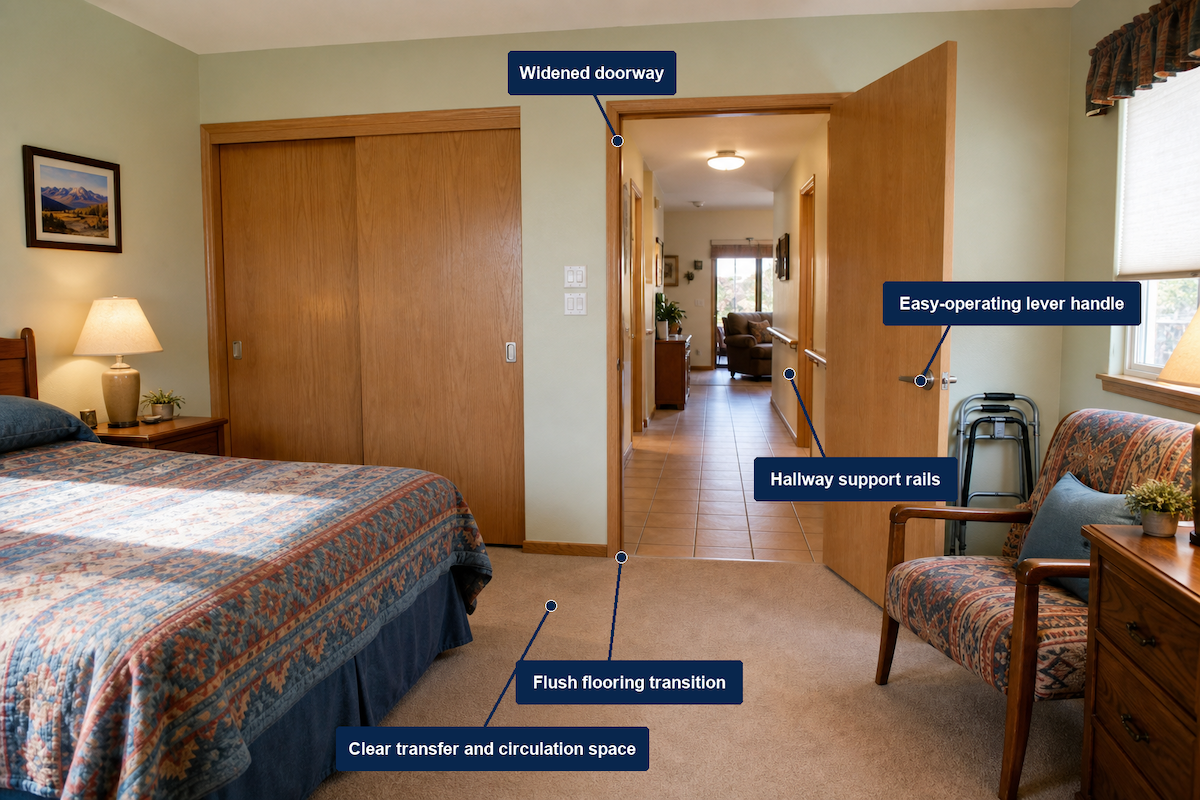
- Wider doors and hallways
- Wheelchair-accessible kitchens
- First-floor bedroom and bathroom suites
- Ramps and step-free entrances
- Relocated laundry facilities
- Improved caregiver circulation
- Reinforced walls for transfer supports
- Long-term universal design improvements
The goal is to address current needs while reducing the likelihood that the home will require repeated major reconstruction as circumstances change.
Caregiver Access and Assistance
A space that works for the resident must also provide enough room for safe caregiver assistance when needed.
We evaluate:
- Transfer space around toilets and showers
- Access beside beds and seating areas
- Door width and swing direction
- Clear routes through the home
- Room for mobility and lifting equipment
- Reach to fixtures and controls
- Safe caregiver positioning
- Storage for medical or mobility equipment
In some homes, small layout changes can significantly improve caregiver safety and efficiency.
First-Floor Living
When stairs become difficult or unsafe, relocating essential daily functions to one level may provide the most practical solution.
Projects may include:
- Converting an office or den into a bedroom
- Adding or remodeling a first-floor bathroom
- Creating a bedroom-and-bath suite
- Relocating laundry facilities
- Improving access between the kitchen, bedroom, and bathroom
- Constructing an accessible addition
- Adapting a casita or guest space
These changes can support independent living while reducing reliance on stairs.
Temporary, Adaptable, and Permanent Solutions
Not every project requires the same level of construction.
A temporary recovery need may be addressed with removable or limited modifications, while a long-term condition may justify permanent structural changes. In other situations, the best approach is to create an adaptable space that can be modified further later.
We can help distinguish between:
- Temporary access solutions
- Removable modifications
- Permanent accessibility improvements
- Future-ready structural preparation
- Phased remodeling plans
This allows the homeowner to balance immediate needs, long-term goals, budget, and available funding.
Working With Medical Professionals and Case Managers
Disability and recovery modifications may be recommended by an occupational therapist, physical therapist, physician, discharge planner, case manager, rehabilitation provider, veterans organization, workers’ compensation representative, Medicaid-related program, disability organization, or insurer.
Tate Construction does not determine medical necessity, eligibility, or coverage. We can review written recommendations and prepare measurements, photographs, construction descriptions, material information, and detailed estimates for the appropriate homeowner, therapist, case manager, agency, insurer, or funding representative.
If the project has already been assessed or authorized, please provide the written scope, required dimensions, mobility information, and estimate instructions when contacting us.
A General Contractor for Complete Home Modifications
Disability and recovery projects may involve ramps, concrete, demolition, framing, plumbing, electrical work, flooring, waterproofing, doors, cabinetry, drywall, painting, and exterior repairs.
As a licensed New Mexico general contractor, Tate Construction can coordinate the complete project and provide one point of responsibility for the construction work.
Contact Tate Construction to discuss disability, recovery, caregiver, or hospital-discharge-related home modifications in Albuquerque, Rio Rancho, Corrales, Placitas, or the surrounding Central New Mexico area.