.avif)
Concrete Patio vs. Pavers: Which Makes More Sense for Albuquerque Homes?
A new patio can turn an unused portion of a yard into a place for outdoor dining, entertaining, cooking, or simply spending more time outside. Once the approximate size and location are established, homeowners often face a fundamental material decision:
Should the patio be constructed from poured concrete or individual pavers?
Both materials can perform well in Albuquerque, but they differ in cost, appearance, maintenance, repairability, load capacity, and installation requirements. The best choice depends on how the patio will be used—not just which material looks better in a photograph.
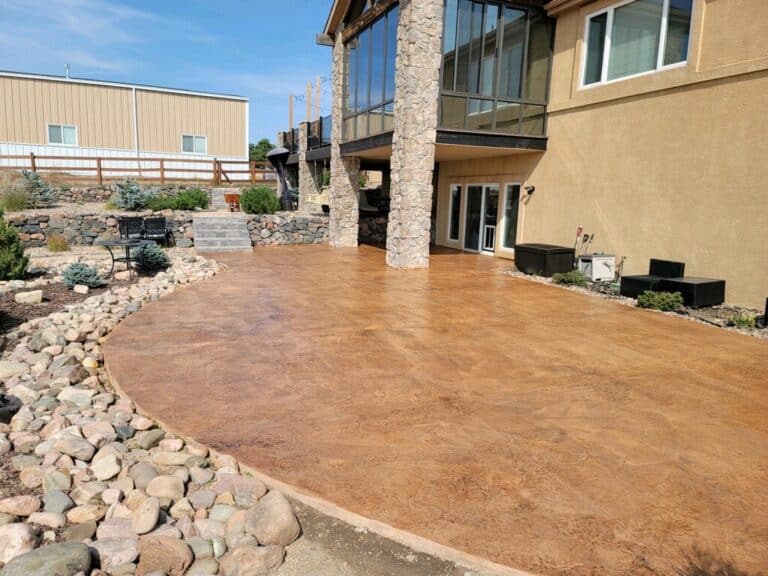
What Is a Poured Concrete Patio?
A poured concrete patio is constructed as a continuous slab. The work normally includes excavation, base preparation, compaction, forming, reinforcement where appropriate, concrete placement, finishing, control joints, and curing.
Concrete can receive several finishes, including:
- Broom finish
- Smooth or hard-troweled finish
- Light texture
- Stamped patterns
- Integral color
- Surface stain
- Decorative borders
Standard broom-finished concrete is typically the most economical professionally installed permanent patio surface. Decorative finishes can substantially change both the appearance and price.
Tate Construction Company provides concrete patios, walkways and residential flatwork throughout Albuquerque and surrounding communities.
What Is a Paver Patio?
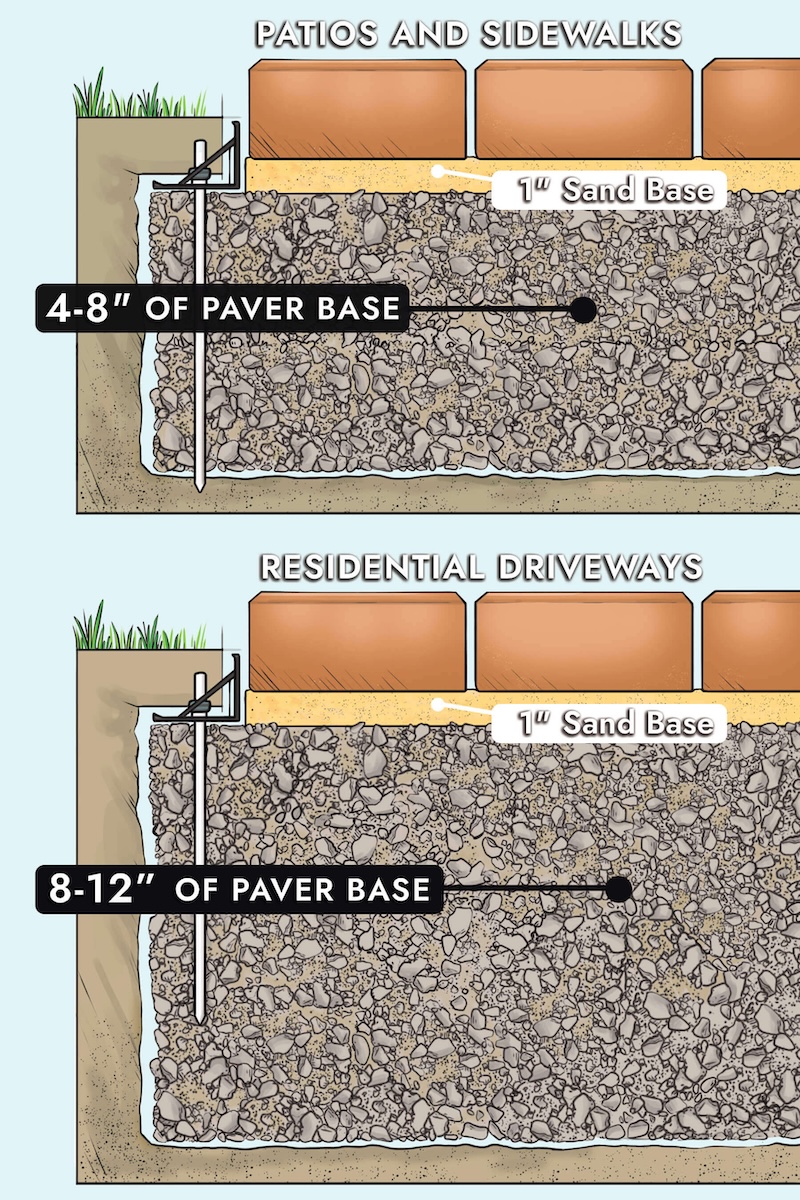
A paver patio is assembled from individual concrete, brick, porcelain, or natural-stone units. Most residential paver patios are installed over an excavated and compacted aggregate base with a bedding layer, edge restraints, and joint material.
Pavers are available in many:
- Sizes
- Colors
- Textures
- Patterns
- Material types
- Edge styles
The individual units create more design flexibility than standard concrete, but the installation usually requires more handling, cutting, leveling, and detail work.
Concrete Patio vs. Pavers: Typical Cost
For early Albuquerque budgeting, homeowners may encounter approximately:
- Standard poured concrete: $10–$20 per square foot
- Decorative or stamped concrete: $15–$30 or more per square foot
- Professionally installed pavers: $18–$35 or more per square foot
These are broad planning ranges rather than project quotations. Demolition, excavation, access, drainage, base requirements, patterns, reinforcement, material selections, and project size can change the actual cost substantially.
Standard concrete generally costs less than a professionally installed paver system. Premium stamped concrete and entry-level pavers may overlap, while natural stone or higher-end architectural pavers can cost considerably more.
For a broader view of patio, landscaping, irrigation, shade, and outdoor-kitchen budgets, read our Outdoor Living Costs in Albuquerque guide.
Which Surface Handles Outdoor Furniture Better?
Poured concrete creates a continuous surface that distributes ordinary patio loads across the slab. It generally works well beneath:
- Dining tables and chairs
- Metal patio furniture
- Grills
- Heavy planters
- Outdoor cabinets
- Fire tables
- Built-in cooking areas
Properly selected and installed full-thickness pavers can also support these uses. However, the paver thickness, base construction, bedding, edge restraints, and individual point loads all matter.
A narrow chair leg places more concentrated pressure on a surface than normal foot traffic. Heavy planters, cast-iron furniture, outdoor refrigerators, grills, and kitchen islands can produce similar concentrated loads. Thin or lightly supported pavers may crack, rock, settle independently, or become uneven under those conditions.
When Inexpensive 1¼-Inch Pavers Are Sufficient
Not every walkway or decorative area requires a premium paver system.
The inexpensive approximately 1¼-inch concrete pavers commonly sold at home-improvement stores such as Home Depot and Lowe’s can be a practical choice when used within their limitations.
They may be appropriate for:
- Garden paths
- Light-duty pedestrian walkways
- Decorative areas
- Access to planting beds
- Small areas with occasional foot traffic
- Locations without vehicle traffic
- Locations that will not support outdoor furniture
- Projects where individual replacement is acceptable
They still need a reasonably prepared and compacted base. Placing thin pavers directly over loose soil does not prevent movement, rocking, or settlement.
These pavers should not be treated as interchangeable with thicker pavers designed for heavier loads.
When Thin Pavers Are the Wrong Choice
Approximately 1¼-inch pavers are generally a poor choice for:
- Driveways
- Vehicle parking
- Trailer access
- Outdoor dining furniture
- Cast-iron or other heavy furniture
- Outdoor kitchens
- Hot tubs
- Heavy grills
- Large planters
- Fireplaces
- Areas that regularly receive concentrated point loads
Outdoor furniture is an important limitation. Table and chair legs repeatedly place weight on small portions of individual pavers. Over time, thin units can crack or settle independently, especially when the bedding and base were designed only for pedestrian use.
For a functional furnished patio, poured concrete or a properly designed full-thickness paver system usually makes more sense.
Which Surface Is More Likely to Crack?
Concrete naturally changes volume as it cures, dries, and responds to temperature. Control joints are installed to encourage shrinkage cracks to form in planned locations, but they cannot guarantee that every crack will remain inside a joint.
A properly built concrete patio can still develop a hairline crack without indicating that the entire installation has failed. The important questions are whether the crack remains narrow and stable or develops separation, displacement, continued movement, or drainage problems.
Paver patios do not normally develop long cracks across the entire surface because they consist of individual units. An individual paver can still crack, and groups of pavers can settle or move if the base, drainage, or edge restraints fail.
Pavers trade the possibility of a continuous slab crack for the possibility of localized movement between individual units.
Which Surface Is Easier to Repair?
Pavers usually offer an advantage when underground access or localized repair is needed. Individual units can be removed and reinstalled, although exact color matching may become difficult as the original pavers age.
Concrete can be repaired, but a patch rarely disappears completely. Differences in color, texture, curing, age, and weather exposure can leave the repaired area visible.
Concrete replacement may be preferable when a slab has:
- Widespread cracking
- Significant vertical displacement
- Major settlement
- Incorrect drainage
- Extensive surface deterioration
- Repeatedly failed repairs
The ability to replace individual pavers is valuable, but it does not correct an unstable base. If the underlying problem remains, the repaired area may settle again.
Weed Growth and Joint Maintenance
A concrete patio has relatively few joints, making it easier to sweep and maintain. Cracks and control joints can still collect debris or support limited weed growth.
Paver patios contain joints throughout the entire surface. Proper joint material helps stabilize the units and reduce weed growth, but it is not a permanent guarantee against weeds.
Organic material can accumulate in paver joints over time. Windblown soil and seeds can germinate above the original base, even when landscape fabric was installed underneath. Depending on the system, joints may periodically need cleaning and replenishment.
Drainage and Albuquerque Monsoon Storms
Neither material should be installed without considering drainage.
A patio should direct water away from the home and toward an appropriate discharge area. Poorly planned slope can send water toward foundations, doors, stucco walls, neighboring properties, or low areas in the yard.
Concrete provides a continuous drainage surface, so its finished elevation and slope must be established correctly during placement.
Traditional paver patios also shed water across the surface. Permeable paver systems can allow more water to enter specially designed joints and base layers, but they require a complete permeable assembly. Standard pavers placed over ordinary base material should not automatically be considered permeable.
Drainage corrections are much more difficult after either patio is complete.
Heat and Sun Exposure
Both concrete and pavers can become hot under Albuquerque’s summer sun.
Surface temperature is influenced by:
- Color
- Material density
- Sun exposure
- Shade
- Time of day
- Surrounding walls
- Reflected heat
- Air movement
Darker pavers and dark decorative concrete generally absorb more heat than lighter surfaces. Shade structures, trees, umbrellas, and the patio’s orientation may affect comfort more than the difference between the two materials.
The larger outdoor plan should address shade before the surface is selected.
Design and Appearance
Pavers offer more built-in variety. Different sizes, borders, colors, and laying patterns can produce a detailed or traditional appearance without stamping a continuous surface.
Concrete can create a clean, simple patio that fits both traditional and modern Albuquerque homes. Stamping, color, saw-cut patterns, and decorative borders can add visual interest.
The patio should relate to the home’s:
- Architecture
- Stucco color
- Existing walkways
- Rooflines
- Landscape materials
- Walls and courtyards
- Intended level of formality
The more elaborate material is not automatically the better design. A simple patio that fits the house often looks more intentional than a busy pattern selected independently of the surrounding property.
Base Preparation Matters for Both Materials
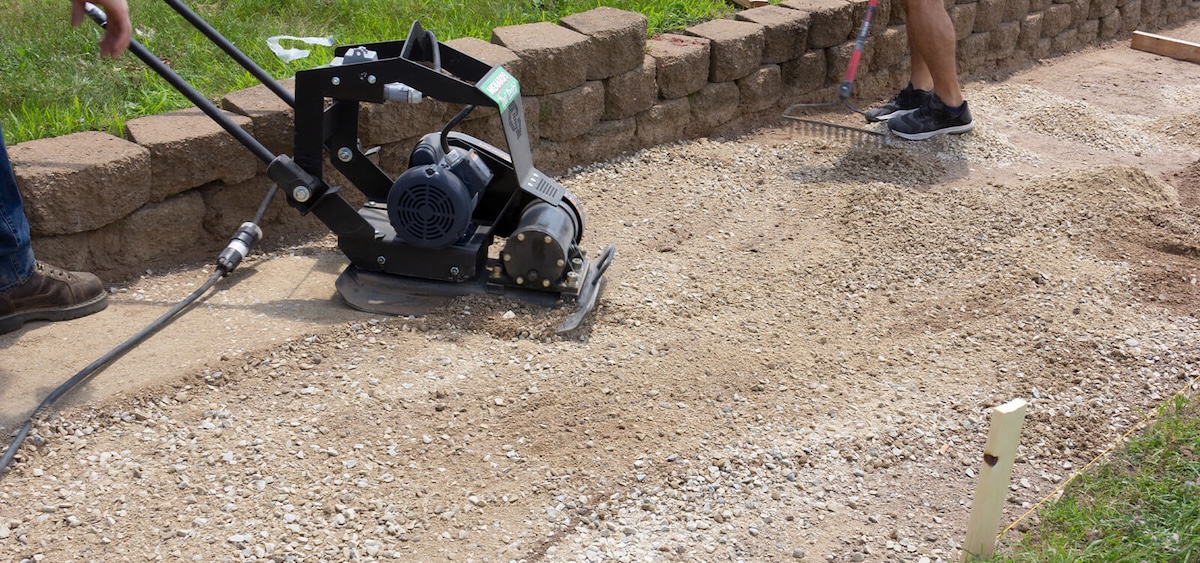
Concrete and pavers are only as reliable as the conditions supporting them.
Important considerations include:
- Removal of unsuitable material
- Compacted base
- Soil conditions
- Drainage
- Finished elevation
- Edge support
- Tree roots
- Utility trenches
- Irrigation lines
- Intended loads
A premium surface installed over poorly compacted fill can still move. This is especially important where utility or irrigation trenches cross the patio area. Improperly compacted trench backfill can create narrow settlement lines through either type of surface.
Which Patio Is Better for Albuquerque Homes?
Concrete often makes more sense when:
- Initial cost is a major consideration
- The patio will support furniture or heavy features
- A clean, continuous surface is preferred
- The design is relatively simple
- Lower joint maintenance is desired
- The patio may support a future outdoor kitchen
Pavers often make more sense when:
- Pattern and material variety are priorities
- Individual repairability is important
- Future underground access is likely
- The budget supports proper professional installation
- The owner understands the joint maintenance
- The chosen paver is appropriate for the intended load
Thin home-improvement-store pavers can make sense for light pedestrian and decorative applications without vehicles, furniture, or concentrated loads. They should not be used as a low-cost substitute for a structural patio or driveway system.
Plan the Entire Outdoor Space First
The patio should not be designed in isolation.
Before installation, determine whether the finished area may eventually include:
- A pergola or patio cover
- Outdoor furniture
- An outdoor kitchen
- Gas or electrical service
- Lighting
- A fire feature
- A hot tub
- Irrigation
- Drainage improvements
- Walkways
- Landscaping
Footings, utilities, conduits, drainage, and future loads should be considered before the patio surface is complete. Planning those elements afterward can lead to unnecessary cutting, removal, and repair.
Tate Construction Company provides concrete, hardscaping, landscaping, irrigation, shade structures, and complete outdoor living construction throughout Albuquerque, Rio Rancho, Corrales, Placitas, Bernalillo, and surrounding communities.
Contact Tate Construction Company to discuss which patio system makes the most sense for your property.