.avif)
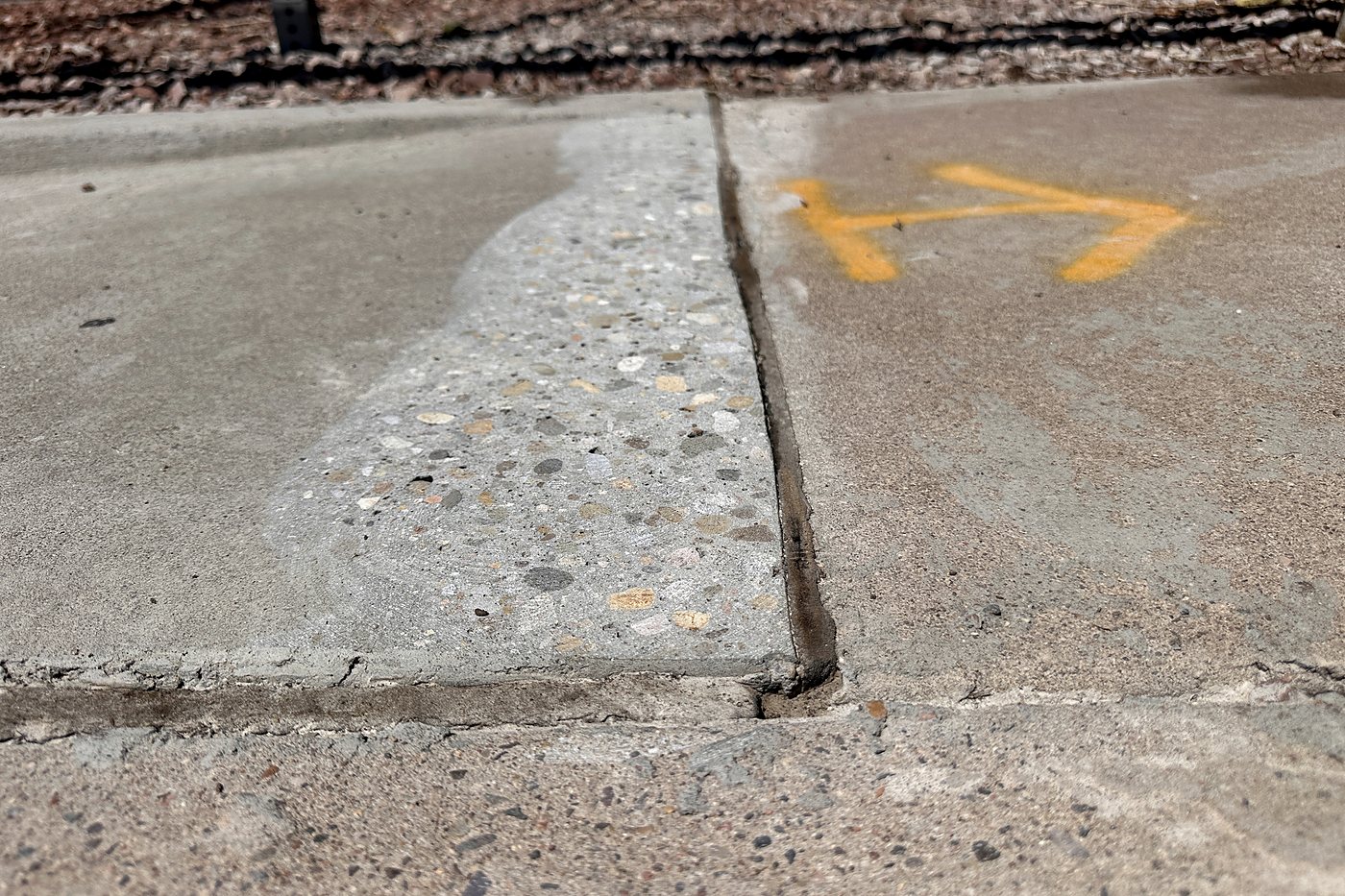
A raised sidewalk joint can create an abrupt trip hazard, but complete slab replacement is not always the only practical correction. The right repair depends on the height and shape of the displacement, the condition of the concrete, drainage, cracking, reinforcing, and whether movement is still active.

When Sidewalk Grinding May Make Sense
Grinding can be appropriate when one otherwise serviceable slab edge sits modestly above the adjoining panel and enough sound concrete remains to create a gradual transition. It preserves the existing slab and can reduce demolition and disruption. Grinding is not a universal answer: the finished surface, remaining slab thickness, drainage, and likelihood of continued movement all need to be considered.
When Replacement Is Usually the Better Choice
Replacement is generally more appropriate when a slab is badly cracked, settled, deteriorated, displaced too far for a reasonable transition, holding water, or affected by an underlying condition that should be corrected. Replacement may also be necessary when elevation, slope, drainage, or route geometry must change rather than simply smoothing one raised edge.
Grinding Versus Replacement Is a Field Decision
A photograph can identify an obvious hazard, but it cannot show every condition that affects repair selection. Tate Construction evaluates the joint, adjacent panels, surface condition, drainage, access, and surrounding work before proposing grinding, replacement, or another limited repair. See our Sidewalk Grinding & Trip Hazard Repair service and broader Concrete services.
Albuquerque Sidewalk and Right-of-Way Considerations
The City of Albuquerque’s sidewalk FAQ states that property owners are responsible for repairing sidewalks in front of or alongside their property and that applicable work must use properly licensed contractors and permits. Requirements can vary with the location and scope, so the specific site should be confirmed before work begins.
When work affects the public right-of-way, the City’s right-of-way permitting guidance calls for advance application and proper protection of pedestrian and vehicular traffic. The City advises submitting applications at least 14 calendar days before the proposed start date. Actual permit, traffic-control, inspection, and barricading requirements should be verified for the project.
Careful ADA Change-in-Level Guidance
The U.S. Access Board’s guide to floor and ground surfaces explains that vertical changes in level up to ¼ inch are permitted, changes above ¼ inch and up to ½ inch must be beveled no steeper than 1:2, and larger changes are addressed as ramps, curb ramps, or sloped walkways as applicable.
Those thresholds help evaluate an individual transition, but correcting one raised edge does not by itself establish that an entire route is ADA compliant. Cross slope, running slope, clear width, surface condition, landings, transitions, and other route features may also matter.
Planning the Repair
A practical evaluation should document the hazard, measure the change in level, review the condition of both panels, identify drainage or movement concerns, confirm right-of-way requirements, and define the proposed finished transition. For an Albuquerque property evaluation, contact Tate Construction.