.avif)
Sidewalk Grinding & Trip Hazard Repair in Albuquerque, NM
Raised sidewalk joints and uneven concrete can create an obvious trip hazard without requiring an entire sidewalk to be removed and replaced. When the concrete is otherwise sound and the elevation difference can be corrected safely, grinding can provide a faster, less disruptive way to improve the walking surface.
Tate Construction Company provides sidewalk grinding and concrete trip-hazard correction for commercial properties, multifamily communities, HOAs, property managers, businesses, and residential properties in Albuquerque and surrounding areas. We evaluate the existing concrete, the amount of vertical displacement, surrounding drainage and slab condition, and whether grinding or replacement is the more appropriate repair.
Recent Albuquerque Sidewalk Grinding Project
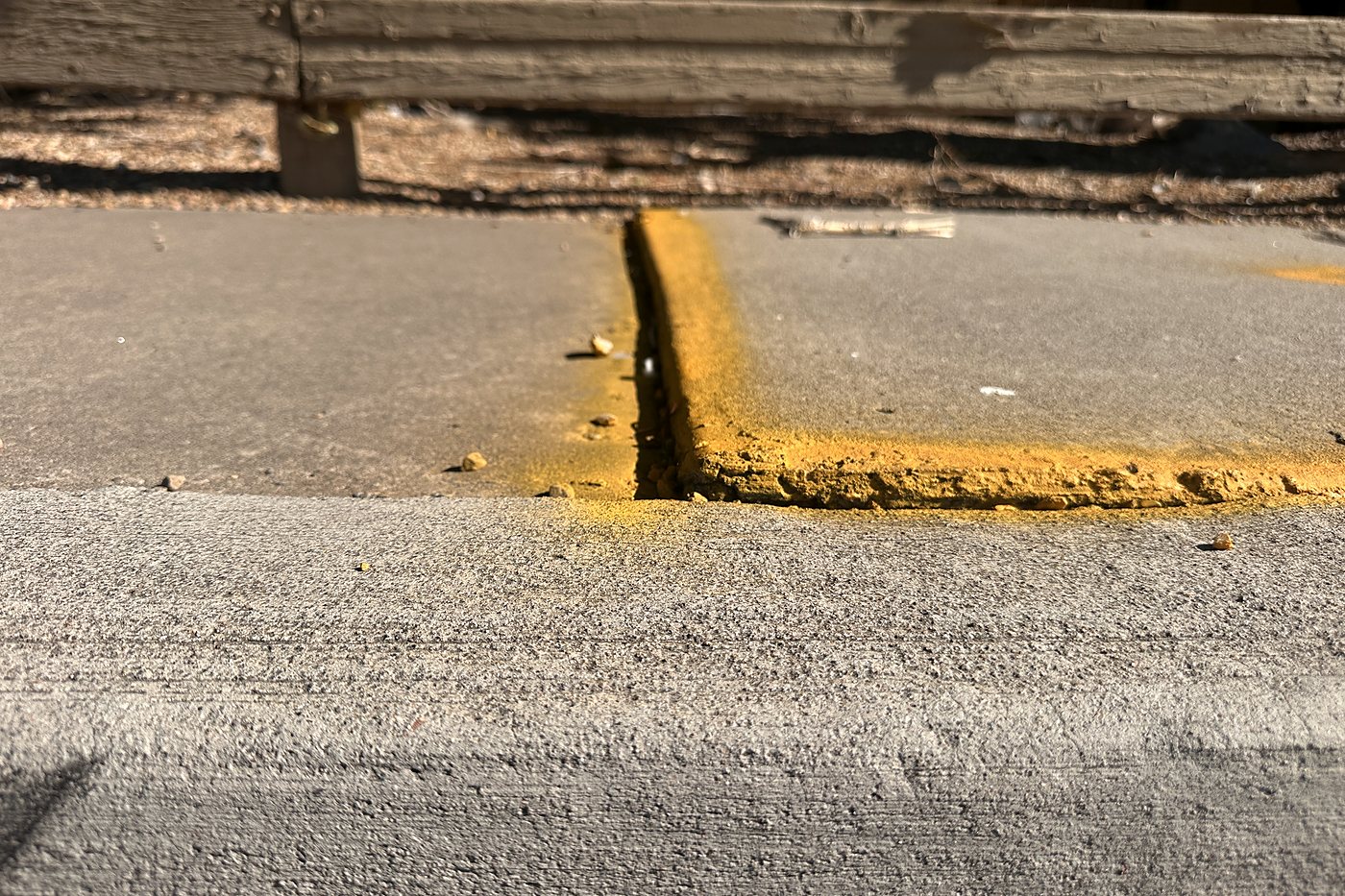
These project photos show multiple raised sidewalk joints that were marked, documented, ground, cleaned, and reviewed by Tate Construction. The existing concrete remained in place while the abrupt high edges were reduced to create smoother walking-surface transitions.

Low-angle views help show a change in level that can be difficult to judge from standing height alone.
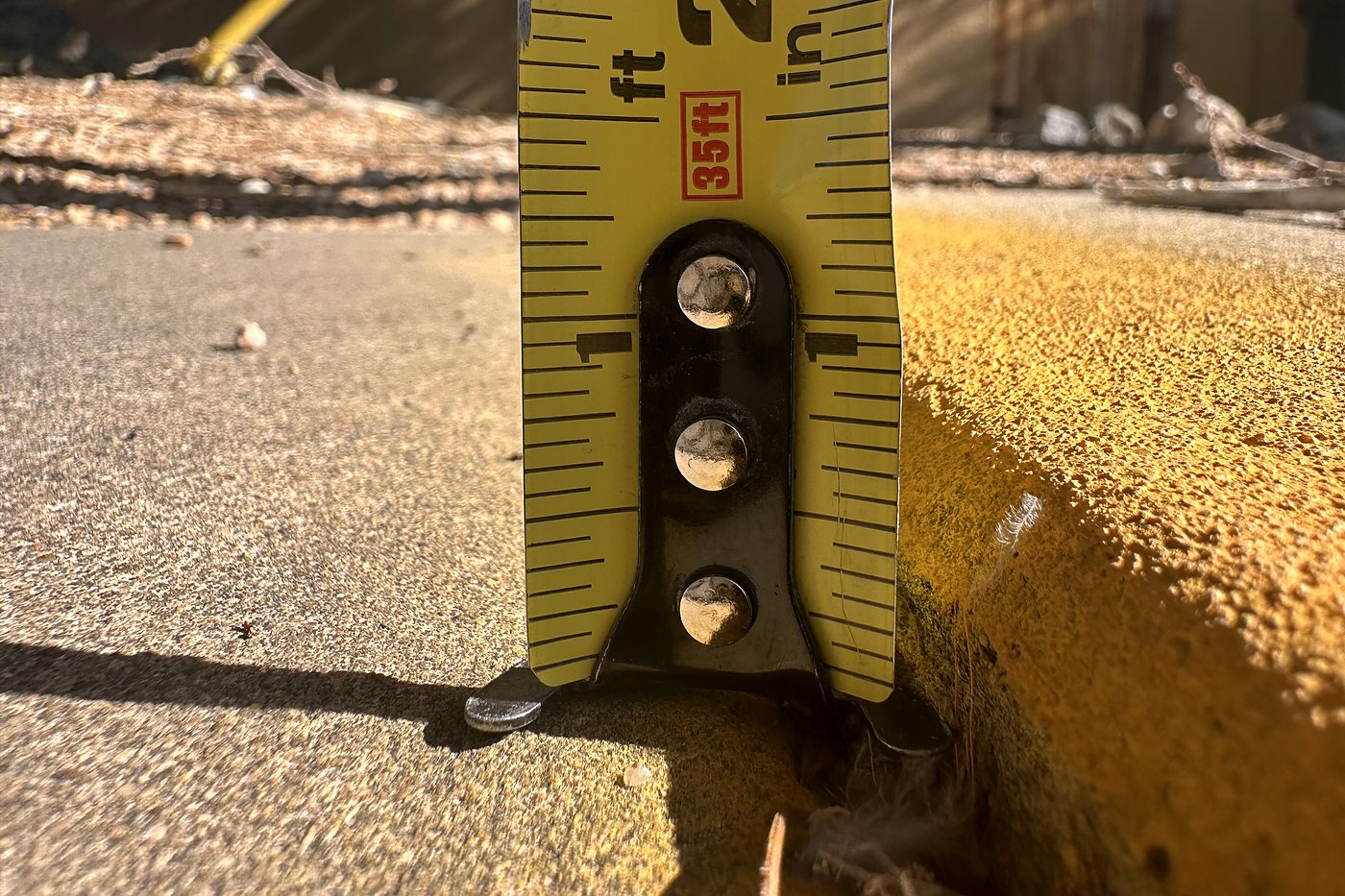
The raised edge was documented before correction, and wet cleanup helped manage the work area after grinding.

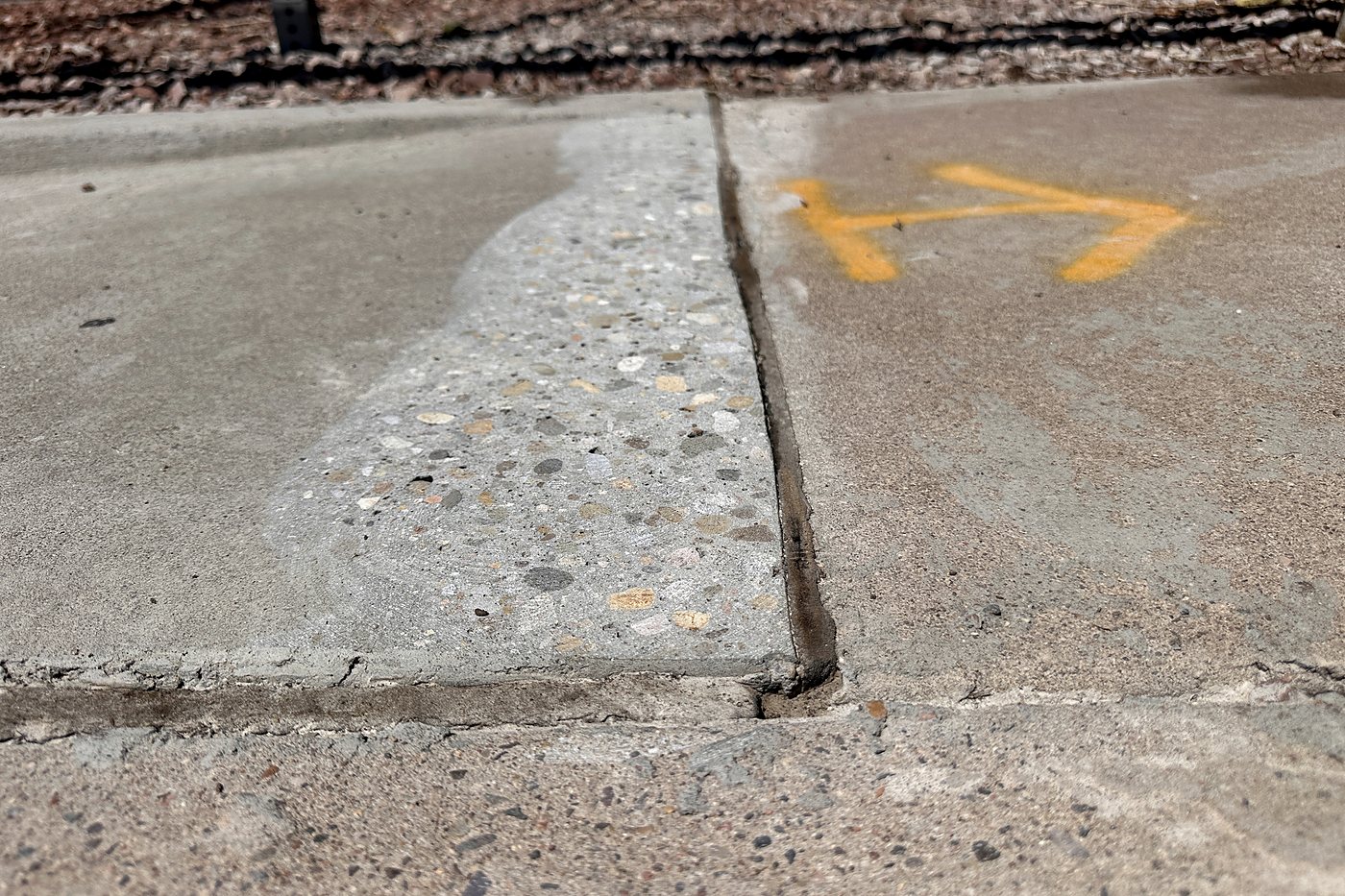
The finished transition was then reviewed at walking-surface level.
When Concrete Grinding Makes Sense
Grinding is most useful when one side of a concrete joint or crack has risen above the adjoining surface but the slab remains structurally serviceable. Rather than demolishing and repouring an otherwise usable section, the high edge can sometimes be mechanically reduced to create a smoother transition.
Grinding may be considered for raised sidewalk joints, isolated trip hazards, walkway transitions, commercial pedestrian routes, concrete around common areas, and other localized elevation differences. Not every condition is suitable for grinding. Severely displaced, broken, deteriorated, unstable, poorly drained, or extensively settled concrete may require removal and replacement instead.
Commercial Properties, HOAs, and Property Management
Trip hazards can create maintenance concerns anywhere customers, residents, employees, tenants, or the public use a concrete walking surface. For property managers and commercial owners, the practical issue is often how to correct multiple isolated hazards without turning a focused maintenance project into widespread concrete replacement.
Tate Construction can walk the affected areas, identify locations that appear suitable for grinding, distinguish conditions that need a different repair, and develop a clear scope for the work. Projects can include individual hazards or multiple locations across a property.
Accessibility and Safer Walking Surfaces
Changes in level can affect pedestrians using wheelchairs, walkers, canes, strollers, carts, or other mobility devices in addition to creating ordinary trip hazards. Where accessibility requirements apply, the finished condition must be evaluated against the requirements governing that particular route and property.
Grinding can be one tool for correcting localized elevation changes, but Tate Construction does not assume that grinding alone makes a route ADA compliant. We evaluate the construction condition and can coordinate broader concrete or accessibility work when the surrounding route also requires correction.
Grinding Versus Sidewalk Replacement
The lowest-cost repair is not always the right repair. Grinding is attractive because it can preserve existing concrete and avoid demolition, forming, placement, curing time, and disturbance to surrounding areas. Replacement is often more appropriate when the slab itself has failed or when the required correction cannot be achieved by removing the high edge.
During an evaluation, we consider the amount and direction of displacement, concrete condition, joint location, cracking, slope, drainage, surrounding grades, and how the walkway is used. If replacement is the better solution, Tate Construction can also perform or coordinate the required concrete work through our Concrete Services.
Our Sidewalk Grinding Process
The work begins by identifying and marking the affected locations. The high concrete is then mechanically ground to reduce the abrupt transition while controlling the work area and concrete slurry or dust as appropriate for the equipment and site conditions. The repaired area is reviewed after grinding to confirm the transition and determine whether additional work is needed.
Commercial sites may also require coordination around pedestrian access, business hours, tenants, parking, barricades, cleanup, and sequencing so the repair causes as little disruption as practical.
City Sidewalk and Right-of-Way Conditions
Sidewalks associated with public rights-of-way can involve property-owner responsibilities, municipal requirements, permits, inspections, or repair standards depending on the location and scope. Tate Construction can evaluate the physical condition and help determine what construction and coordination may be required before work proceeds.
Permit, accessibility, and approval requirements vary by property and jurisdiction. Any required City approval remains subject to the applicable reviewing authority.
Planning Resources and Completed Project
For commercial properties, HOAs, and multifamily sites, read our sidewalk inspection and repair-planning guide. To understand how the number of raised joints, access, concrete condition, and cleanup influence scope, see what affects sidewalk grinding cost in Albuquerque.
For a closer comparison of repair options, Albuquerque right-of-way considerations, and careful change-in-level guidance, read Sidewalk Grinding vs. Replacement in Albuquerque.
See the real before-and-after photographs and work summary in our completed Albuquerque sidewalk grinding project story.
Schedule a Sidewalk Trip-Hazard Evaluation
If you have raised sidewalk joints, uneven concrete, accessibility concerns, or multiple trip hazards around a commercial or residential property, Tate Construction Company can evaluate which locations may be candidates for grinding and which require a different repair.
Contact Tate Construction Company to discuss sidewalk grinding and concrete trip-hazard repair in Albuquerque and surrounding communities.